In This Article

This is a complete index of wedding traditions across 30+ communitiesorganized by region and tradition, with inside-the-tradition reference notes. I built this page as a working directory, the kind of thing I wished I had when I first started covering weddings. You will find it useful whether you are a journalist on deadline, an event planner, a cultural center, or someone planning an interfaith wedding. Each tradition is summarized in roughly 100 to 200 words: the canonical practices, the regional variations, and where to go to read deeper.
I update the directory every quarter as new traditions join through the Cultural Wedding Atlas franchise.
How to use this page
Here is how I would use it. Each section below covers one tradition's wedding practices, and you can jump straight to the region you came for. I want to be honest with you about scope: these summaries are not deep guides. For that, you want the Cultural Wedding Atlas franchise, where each tradition gets a full inside-the-tradition feature written by someone from that community.
Think of this page as the navigation layer, the map rather than the territory. In my experience, that is exactly what most people need first, a quick orientation before they dig in. I built the first draft of this index late one night before a friend's interfaith wedding. I had a dozen browser tabs open because no single page held it all.
This is the page I wished I had that night.
South Asian wedding traditions
Hindu weddings
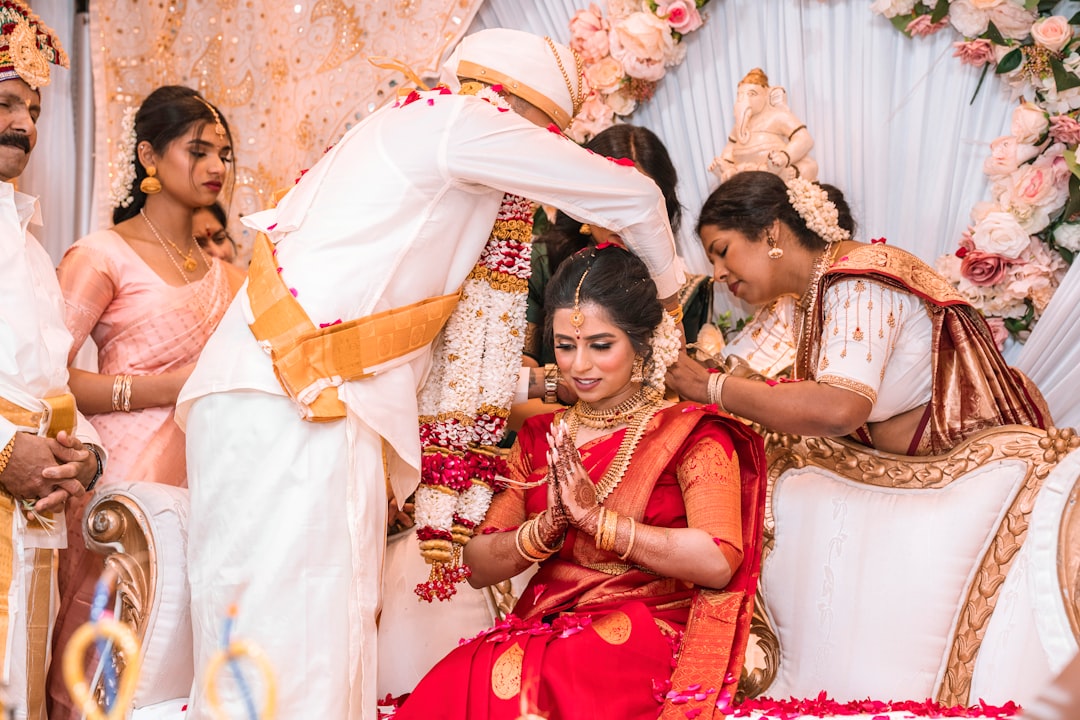
If you have ever been to a Hindu wedding, you know it is a multi-day celebration. At the heart of it is the saat phere, the seven sacred circles around a holy fire. Most run about three days, though I have seen them stretch to seven. The bride traditionally wears a red lehenga or sari.
In some South Indian traditions, you will find a regional variation, where white is worn instead. The groom often wears a sherwani.
A few pieces you will want to know. The mehndi is the henna application the day before, the sangeet is a music and dance night, and the haldi is the turmeric application. Then come the baraat, the groom's procession, and the vidaai, the bride's farewell. Trust me, the vidaai is the moment that gets everyone.
Sikh weddings (Anand Karaj)
The Sikh wedding centers on the Anand Karaj, the four laavan (hymns) performed at the Gurdwara. You will watch the bride and groom walk around the Guru Granth Sahib (the Sikh holy text) four times, once for each laavan. As for dress: the bride wears a red or pink lehenga or salwar kameez, and the groom a sherwani with kalgi (a turban ornament). In my experience, the ceremony is almost always held in the morning, with the larger reception following later.
Muslim South Asian weddings (Nikah)
The nikah is the religious ceremony, conducted by an imam, with the signing of the marriage contract. The walima is the wedding reception, given by the groom's family. Traditional dress varies by region, and you will see red, gold, or pastel lehengas and saris for the bride, and a sherwani for the groom. Pre-wedding rituals include the mehndi and the haldi.
You have to remember that the specifics shift from one community to the next, whether Punjabi, Bengali, or Hyderabadi.
East Asian wedding traditions
Chinese weddings
In my experience, modern Chinese weddings often blend Western white-dress conventions with traditional Chinese elements. The traditional bride wears a red qipao or hung kwa. The tea ceremony is the heart of it, where the couple serves tea to elders in exchange for red-envelope gifts. You will also see the groom ritually "pick up" the bride from her family home in a choreographed arrival the whole family joins.
If you are invited to the banquet, come hungry. These typically run eight to twelve courses, and every dish carries its own symbolic meaning.
Korean weddings (Hanbok ceremony)
If you are attending a Korean wedding, you will often find a Western-style ceremony followed by the paebaek. The paebaek is the part where the couple wears hanbok and pays respect to the in-laws, with bows, offerings, and the catching of jujubes. I love this detail. The chestnuts thrown by the elders are said to predict the number of children.
You will hear plenty of laughter as the couple scrambles to catch them.
Japanese weddings
Traditional Shinto weddings include the san-san-kudo, the three-times-three sake exchange. The bride wears the shiromuku (a white wedding kimono) or the uchikake (a colored ceremonial kimono). You will usually find the ceremony held at a Shinto shrine. In my experience, modern Japanese weddings frequently pair a Shinto ceremony with a Western-style reception.
Guests often get to see both worlds in a single day.
Middle Eastern wedding traditions
Persian weddings
You will find the sofreh aghd at the center of a Persian wedding, a richly set ceremonial tablescape. Every item carries meaning: a mirror for reflection, candles for light, sugar cones for sweetness, eggs and almonds for fertility, and gold coins for prosperity. My favorite part is the kalleh ghand, where close female relatives grind sugar over the couple's heads to sweeten the marriage. It is a small, tender ritual, and once you have seen it you will never forget the sound.
Lebanese weddings (Christian and Muslim)
In my experience, Lebanese weddings often blend French Mediterranean conventions with Levantine traditions. The zaffe, a celebratory procession with drummers and dancers, is central, and you can usually hear it before you see it. Sword dancing, dabke dancing, and elaborate multi-stage receptions are all common. Plan to pace yourself, because the wedding typically spans the whole day, from the morning rituals straight through to late-night dancing.
Egyptian weddings
Egyptian Coptic Christian weddings include the khutuba (the engagement) and the katb el-kitab (the signing of the marriage contract) before the main ceremony. Muslim Egyptian weddings, by contrast, center on the nikah. What you will remember from either one is the zaffa, the wedding procession with belly dancers, drummers, and singers. It is the signature element of both, and trust me, it announces the celebration to the entire street.
Latin American wedding traditions
Mexican weddings
Two elements anchor a Mexican wedding, and you will want to watch for both. The first is the lazo, a large rosary or floral cord placed around the couple in a figure-eight. The second is the arras, thirteen gold coins the bride and groom exchange to symbolize their financial commitment to each other. Padrinos, the godparents, play a significant role and sponsor various parts of the wedding.
Mariachi music, the vibora de la mar dance at the reception, and the cake-cutting round out the signature moments.
Brazilian weddings
Brazilian weddings traditionally include the hora de fuga, the bride's fashionably late arrival, which I want to reassure you is considered traditional rather than rude. The wedding party often features the padrinhos, the godparents, rather than bridesmaids and groomsmen in the American sense. When the reception gets going, you will find samba, capoeira, and feijoada or other regional Brazilian cuisine carrying the night.
Argentine weddings
Argentine weddings often happen on Saturday evenings and extend until dawn, closing with the despedida, a farewell breakfast served right at sunrise. Tango is the signature first dance, and it is worth staying for. One thing you should know: the civil ceremony at the registry office is often kept distinct from the religious one. The two sometimes happen days apart.
African wedding traditions
Nigerian weddings (Yoruba)
In my experience, Yoruba weddings often span multiple ceremonies: the introduction, the engagement, the traditional wedding, and the white wedding in the Western style. The bride traditionally wears aso oke, a handwoven fabric, with a gele head wrap. One detail I love is the aso ebi tradition, where families and guests wear matching fabrics so you can read the room at a glance. The exchange of gifts between the two families sits at the center of it all.
Ethiopian weddings (Orthodox Christian)
Ethiopian Orthodox weddings move through several stages, and you will want to keep them straight. The melse is the religious blessing, the kelekel is the bride's farewell from her family, and the melecha is her arrival at the groom's family. The bride wears the habesha kemis. When the feast begins, you will find injera on every plate with the doro wat as the centerpiece.
If you came here while planning your own wedding, I have a few related pieces that might help. Start with my guide to planning a wedding on a budgetthe wedding guest guideand the guide to writing your vows.
South African (Zulu)
Zulu weddings traditionally move through three stages. There is the umembeso, a gift exchange between families, the lobola, the bride price negotiation, and the umabo, the bride's gift-giving to the groom's family. You will often see the traditional wedding celebrated alongside or just before a Western-style ceremony. The distinctive Zulu wedding attire and dance traditions are, in my experience, what every guest remembers afterward.
European wedding traditions
Greek Orthodox weddings
The stephana, two wedding crowns joined by a ribbon, are central to the Greek Orthodox ceremony. You will watch the couple led around the altar three times in what is called the dance of Isaiah. At the reception, look for money-pinning during the bride's dance and the koufeta, sugar-coated almonds handed to guests in odd numbers. I have always found the koufeta a lovely thing to take home.
Italian weddings
Italian Catholic weddings often span an entire weekend of celebration, so settle in. The reception traditionally runs five to seven courses, with bomboniere (sugar-coated almond favors). There is also the old custom of the bride wearing a bit of blue, often a garter. You should know that regional Italian traditions vary a great deal.
A Sicilian wedding will not look quite like a Roman or Venetian one.
Jewish weddings
In my experience, Jewish weddings center on a handful of cherished elements. There is the chuppah (the wedding canopy) and the ketubah (the signed marriage contract). There are the seven blessings, and the breaking of the glass at the ceremony's end. The post-ceremony yichud, a few minutes of private time for the couple, is traditional too.
When the reception starts you will find the hora, the joyous chair dance, lifting the couple into the air. Reform, Conservative, and Orthodox communities each vary in the specifics.
Native American wedding traditions
Cherokee weddings
Traditional Cherokee weddings include the blanket ceremony, where the couple wraps in a single blanket to symbolize their union. You will also see the offering of corn and venison, representing the bride's and groom's contributions to the household. Then comes the lighting of a unity fire. As with every tradition on this page, the practices vary by Cherokee community, so treat this as a starting point rather than the last word.
Navajo weddings
If you are invited to a traditional Navajo wedding, here is what you should expect. The ceremony brings together the basket ceremony, the offering of gifts to the bride's family, and the blessing by elders. The couple eats corn mush from a sacred basket, and it is a quiet, deliberate moment worth watching closely. Many Navajo weddings now combine these traditional elements with a Western or Christian ceremony.
Caribbean wedding traditions
Trinidadian Hindu weddings
The Trinidad-and-Tobago Hindu wedding tradition preserves many North Indian Hindu wedding elements, adapted over generations to the Caribbean context. You will find the maticoor (a pre-wedding women's ceremony), the cooking day, and the multi-day reception sequence at its heart. I point to Trinidadian Hindu weddings often. They are a living example of how a diaspora tradition can evolve while keeping its cultural core intact.
Jamaican weddings
Jamaican weddings traditionally include the black wedding cake, a rum-soaked fruitcake with a deep history that you really should taste at least once. The reception traditionally features the tambo dance, large family attendance, and a celebration that stretches well into the early morning. In modern receptions you will hear reggae and dancehall carrying the dance floor.
Interfaith and intercultural weddings
The Hindu-Christian wedding
If you are planning one of these, you are in good company. Many modern interfaith couples blend both traditions, holding a Christian ceremony followed by a Hindu ceremony, or the reverse, often on different days. Honoring both faiths fully without quietly compromising either is genuinely hard, and it is real editorial territory. I would point you to the inside-tradition guides for the deeper how-to.
The Jewish-Christian wedding
Modern interfaith couples often work with both a rabbi and a minister, or bring in a humanist officiant who can weave both traditions together. From what I have seen, the chuppah can be incorporated without the full Jewish service. The breaking of the glass also travels well as a cross-tradition element that both sides tend to embrace.
The Catholic-Muslim wedding
This pairing takes careful coordination between the two faith traditions, and I would not rush it. The nikah can be conducted separately from a civil ceremony or a Catholic ceremony, depending on what the couple and their families want. For the real specifics, you want inside-tradition writers from both communities, not a directory summary like this one.
For the inside-tradition writers
I want to be straight with you about what this page is: a directory layer, nothing more. Each tradition above deserves a full feature of 2,500 to 3,500 words in the Cultural Wedding Atlas franchise. As those get written, they will replace the brief summaries here. If you are from one of the communities above and you want to write the inside-tradition feature, I would genuinely love to hear from you.
Write to [email protected]. We are building the bench, one tradition at a time.
Last updated
I last updated this index in May 2026, and I add new traditions every quarter as Cultural Wedding Atlas features ship. If you spot something that needs fixing, or you know a tradition I have missed, please tell me. Submissions and corrections are always welcome at [email protected].