In This Article

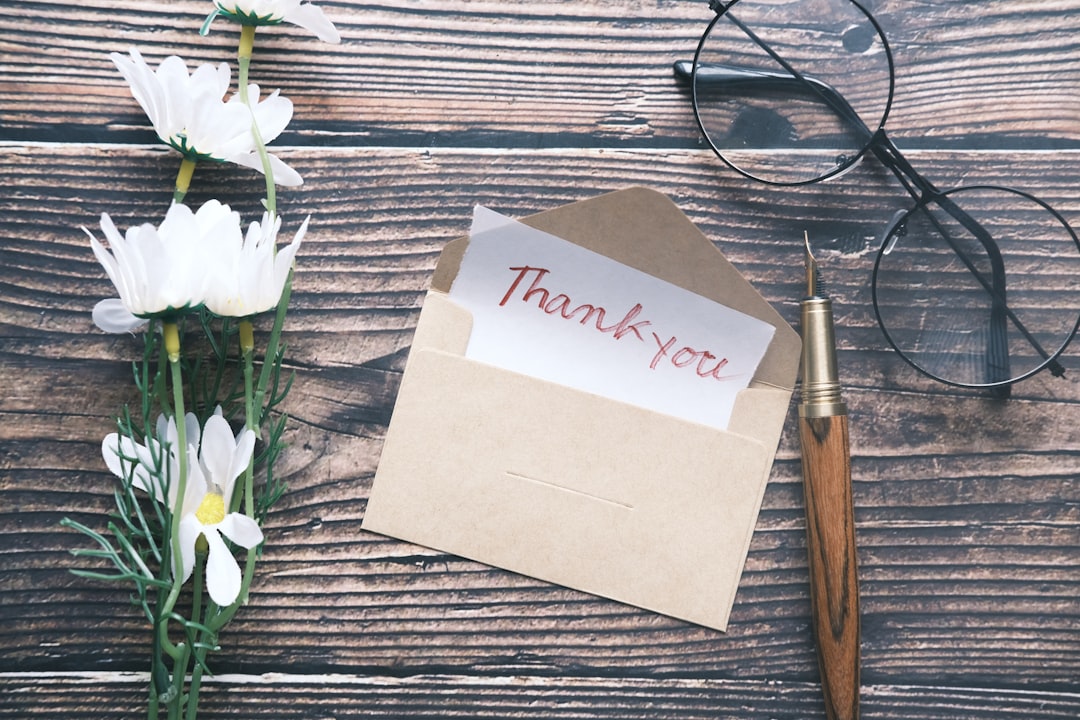
The pattern, named. There is a category of thank-you note that lands as worse than no thank-you at all. It is the form-letter thank-you: the note that mentions no specific detail about the gift, makes no reference to the giver. Could have been mass-produced for any recipient.
The form-letter thank-you tells the giver one thing very clearly: I did not actually open this gift. I did not register what it was, or I did not think about you long enough to remember.
What the pattern looks like
“Dear [Auntie],
Thank you so much for your generous gift! It was so thoughtful and we love it!! It will be put to great use in our new home.
Love,
[Couple's first names]”
In my experience, reading that note tells you nothing about the gift, nothing about the relationship. Nothing about the writer’s actual feelings on receiving it. The exclamation points are doing the entire emotional work of the message. The giver, reading it, knows: this is a form letter sent to forty people.
Their card was not opened separately. Their effort in choosing the gift was not registered.
Why the pattern is everywhere
Trust me, three modern conditions. One: we now receive more thank-you notes for fewer occasions (weddings, baby showers, milestone birthdays). Writing forty personalized notes feels exhausting. Two: the available templates online lean toward the form letter.
The internet is full of “wedding thank-you template” results that produce exactly this kind of note. Three: there has been a cultural drift toward thank-you-as-obligation rather than thank-you-as-expression. The note is something you check off, not something you write.
The three-detail rule
Detail one: name the gift specifically
Not “your generous gift.” Not “your beautiful present.” The actual gift, named. “The cast-iron pan with the wooden handle”. “The hand-thrown ceramic vase in the rust glaze”. “The Le Creuset Dutch oven in cerulean.” The naming proves you opened it and registered what it was.
Detail two: mention one concrete way you’ll use it
Not “we’ll get a lot of use out of it.” Specific. “The Dutch oven is going to live on top of the stove next to the pasta jar. We’ve already planned the Sunday-night chicken stew for the first cold week.” The specificity proves. You have already integrated the gift into the texture of your real life.
Detail three: reference one moment with the giver
Not “thank you for your love and support.” A specific moment. “I keep thinking about how you taught me to make matzo ball soup the summer I was in college, in your kitchen. Now we have a Dutch oven to make it in.” The moment locates the relationship. The note becomes a small piece of correspondence, not a form.
Practical templates that actually work
Dear Mira,
Thank you so much for the linen sheet set with the navy piping. We unpacked them yesterday and put them on the bed last night. I have to tell you, I have not slept that well in a year. They feel like the kind of sheets people in better movies sleep on. I have a related piece on how to write a love letter if that is what you came here looking for. I have a related piece on love letter vs paragraph vs note if that is what you came here looking for. I have a related piece on heartfelt appreciation messages if you want that next.
I keep thinking about how you came to brunch the morning after we got engaged, when neither of us had slept. You handed me your coffee. You have always known what people need. Thank you for these, and thank you for that.
Love, Sarah and David
What to skip
- The phrase “your generous gift.” Always replace with the named gift.
- Multiple exclamation points. One per note is usually enough.
- The phrase “we love it!!” without saying what “it” is.
- “Thank you for being part of our special day”, the most form-letter phrase in modern wedding correspondence. Replace with something specific to the moment they shared.
The takeaway
Three details, the named gift, the named use, the named memory, is the difference between a note that registers and a note that performs. The giver will know which one you sent. Write the one that registers.
Frequently asked questions
How long should a thank-you note be?
In my experience, 3 to 5 sentences. The three details fit naturally in that range. Anything shorter is form-letter territory. Anything longer often dilutes the specificity.
Should I write thank-you notes by hand or by email?
In my experience, handwritten for wedding gifts, milestone-birthday gifts, and the close-relative gift category. Email is fine for the gift sent from a long-distance friend in the casual zone. Texts are fine in the closest-friend zone only. For the texting-side of this, see the houseguest who never asks to extend.
Is it really worth writing 40 thank-you notes for a wedding?
In my experience, yes. The notes don’t all have to ship the same week, many couples space them over two months. The investment in real notes is repaid by the relationships staying intact.