In This Article

What is the pursuer-distancer dynamic? A self-reinforcing relationship pattern where one partner pursues connection (asks more questions, raises more topics, presses for resolution) and the other distances (gives shorter responses, takes more space, defers conversations). The mechanism: the pursuer's pursuing increases the distancer's need to withdraw, and the distancer's withdrawing increases the pursuer's need to pursue. Both partners are doing what their nervous system is calibrated for. Neither is wrong. The trap is that the dynamic feeds itself.
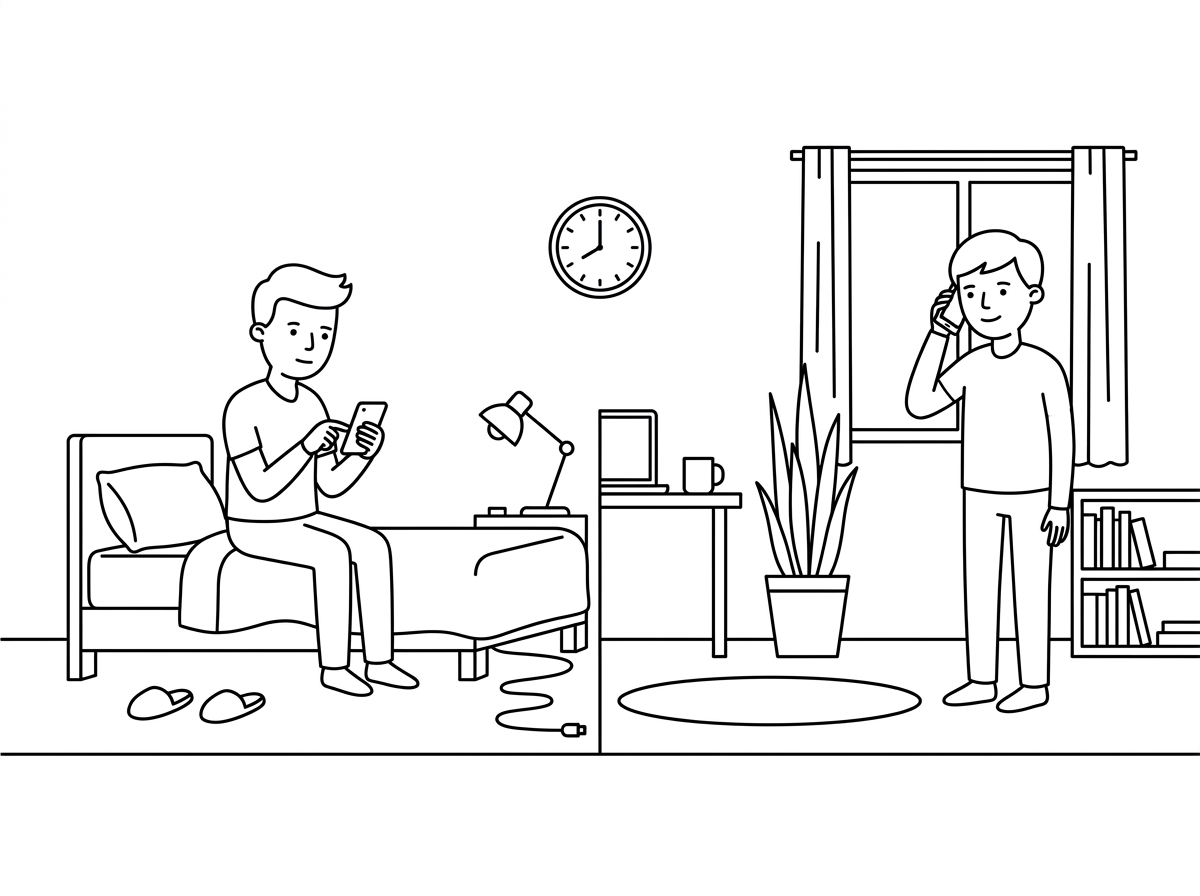
One of you wants to talk about the relationship. The other doesn't. The first one pushes harder. The second one withdraws further. The first one feels rejected; the second one feels suffocated.
This is the pursuer-distancer dynamic, and it's the single most common pattern that brings couples into therapy.
What the pattern looks like
The pursuer:
- Initiates more relationship conversations
- Asks "how are we doing"
- Wants to resolve issues immediately
- Reads space-taking as withdrawal of love
- Pursues physically (following from room to room) and verbally (texts, "are you ok")
- Often the more emotionally expressive partner
The distancer:
- Gives short responses to relationship questions
- Says "I don't know" or "let's talk later" often
- Needs more space to process
- Reads pursuit as pressure or invasion
- Goes quiet during conflict
- Often the more analytical or self-contained partner
The mechanism: why it self-reinforces
The pursuer's pursuit doesn't get them what they want. It gets them more distance, because the distancer is more triggered by pressure than by silence. So the pursuer pursues harder.
The distancer's distance doesn't get them what they want either. It gets them more pursuit, because the pursuer reads withdrawal as alarm. So the distancer distances further.
Each partner's strategy increases the other's need for the opposing strategy. The dynamic feeds itself.
What's actually underneath
From family-systems theory (Murray Bowen) and attachment theory: most pursuer-distancer dynamics are attachment-style mismatches.
- The pursuer often runs anxious-attachment patterns, sensitive to signals of unavailability
- The distancer often runs avoidant-attachment patterns, overwhelmed by emotional intensity
This isn't always the case (sometimes the pursuer is just culturally socialized to handle relationship maintenance), but it's the most common configuration.
How to break the cycle
Three moves, in order of leverage:
1. The pursuer takes a step back
The single highest-leverage change is the pursuer slowing the pursuit. Not stopping, slowing. The distancer often comes forward when there's space to come into.
This is hard. The pursuer's nervous system reads "stopping pursuit" as "letting the relationship go," which is the deepest fear. But the data is clear: less pursuit, more reach-back.
2. The distancer narrates the distance
The distancer's withdrawal isn't the problem, unannounced withdrawal is. Saying "I need 30 minutes, I'll be back" changes the pursuer's experience of the same physical event.
"I love you. I'm not pulling away from us. I just need a minute" is a sentence that breaks the cycle.
3. Both partners practice the opposite move once a day
The pursuer practices being the one who initiates a moment of low-engagement (sitting in the same room, not talking). The distancer practices being the one who initiates a moment of connection (a question, a hand on the back). Daily reps in opposite directions retrains the system.
What not to do
- Pursuer: don't pursue harder. Don't multi-text. Don't follow them physically when they take space. Don't escalate stakes ("If you walk out, that's it").
- Distancer: don't disappear without naming it. Don't say "I'm fine" when you're not. Don't punish the pursuer with longer-than-promised silences.
Common confusions
Pursuer-distancer vs gendered dynamics: classic couples-therapy literature framed this as "she pursues, he distances." Modern data shows it's more about nervous-system patterns than gender, same-sex couples show the same dynamic, with whoever runs more anxious typically pursuing.
Pursuer-distancer vs unhealthy: the dynamic is common and not inherently pathological. It becomes a problem when neither partner can flex out of their role.
Pursuer-distancer vs love language mismatch: love language differences are about HOW partners express care. Pursuer-distancer is about how they handle relational distance and intensity. Different layer.
Where the research stands
The pursuer-distancer concept comes from family-systems theory (Bowen, Lerner) and has been operationalized in attachment-research terms by Sue Johnson (EFT) and Stan Tatkin (PACT). Lerner's Dance of Anger (1985) is the most accessible book-length treatment of the pattern. The Gottman Institute's research overlaps significantly through their "demand-withdraw" framework.
The bottom line
The pursuer-distancer dynamic isn't either partner's fault. It's a pattern two nervous systems are caught in together. The repair is shared work: the pursuer practicing space, the distancer practicing presence, and both narrating what they're doing instead of just doing it.
Related: Anxious attachment in conflict · Avoidant attachment in conflict